Tree Pruning
Precision pruning for structure, safety, and long-term tree health — not just a quick haircut.
Signs You Need Tree Pruning
Weak, narrow-angled branch unions that could split under wind or ice load
Recent storm damage that's left broken or hanging limbs
A dense canopy that's blocking light and airflow to the tree's interior
Pruning is more surgical than trimming. Instead of cutting back overgrowth, pruning targets specific branches — weak unions, crossing limbs, deadwood — to correct a tree's structure and reduce future risk. Done right, a young tree grows into a strong shape, and a mature tree sheds less weight in storms and lives longer.
Our Process
How We Prune a Tree
Structural Assessment
We evaluate branch structure, weak unions, competing leaders, and deadwood.
Pruning Plan & Quote
We explain what we'd remove and why, with a flat price before any climbing gear goes on.
Climb or Bucket Access
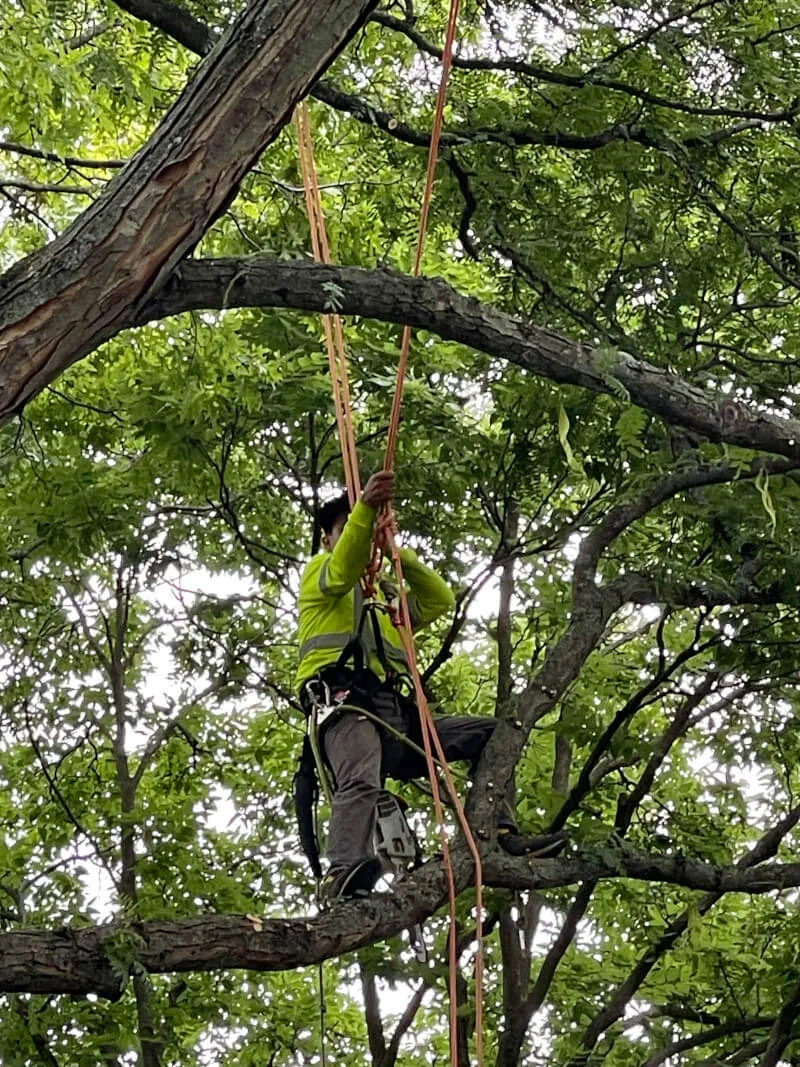
Rope-and-harness climbing or bucket truck, depending on height and canopy density.
Targeted Cuts
Clean cuts at the branch collar — the correct point for the tree to seal and heal.
Canopy Balance Check
We step back periodically to check overall shape, not just cut branch by branch blindly.
Cleanup & Debris Removal
All cut material is chipped or hauled before we call the job finished.
Local Conditions
Pruning Around Zion & Lake County
Ice storms are a regular part of Lake County winters, and trees with weak branch unions or overextended limbs are the ones that lose big sections when ice loads them down. Structural pruning done ahead of winter measurably reduces that risk. We also do a lot of corrective pruning on younger trees planted in newer Zion-area subdivisions that missed follow-up structural care in their first years.
Request Free EstimateLicensed & Insured
For climbing & rigging work
20+ Years
Learning local species
Correct Cuts
At the branch collar, every time
Upfront Plan
You see it before we climb
Recent Tree Pruning Work
Tree Pruning FAQs
Trimming is general shape and clearance maintenance — cutting back branches that are overgrown or in the way. Pruning is more targeted and technical: it's about removing specific branches for the tree's long-term structure, health, and safety, like correcting weak branch unions, thinning a dense canopy, or removing crossing limbs before they cause damage.
Young trees benefit from structural pruning starting a few years after planting, and again every few years through their first decade. Early pruning establishes a strong central leader and well-spaced branches, which prevents costly structural problems as the tree matures.
Often, yes. If the damage is limited to a portion of the canopy and the trunk and major limbs are intact, corrective pruning can remove the damaged wood and let the tree recover its shape over a season or two. We'll give you an honest assessment of whether pruning is enough or if removal makes more sense.
Pruning costs vary based on the tree's size and the scope of work, typically ranging from $200 to $900 per tree. Structural pruning on young trees costs less than crown reduction or thinning work on a large, mature tree. You'll get an exact number after we assess the tree.
Light pruning and deadwood removal are safe in summer, but heavier structural pruning is best done in late winter dormancy when the tree isn't actively pushing new growth. If a branch is a safety hazard, though, we'll remove it regardless of season.