If you have ever wondered whether you are trimming your trees at the wrong time of year, you are asking the right question. In Illinois, timing affects how well a tree heals, how much it grows back, and in some cases whether it stays healthy at all. Here is a straightforward season-by-season guide for homeowners in Zion and across Lake County.
Short answer: For most trees, the best time to trim is during the dormant season, late fall through late winter. The big exception is oaks, which should not be pruned from roughly April through July because of oak wilt.
Why Winter Is the Best Time to Trim Trees
When a tree drops its leaves and goes dormant, it is under the least stress. That makes late fall through winter the preferred window for most tree trimming and structural pruning, for a few reasons:
- Better visibility. With no leaves in the way, we can see the branch structure, spot weak unions, dead wood, and crossing limbs, and make cleaner decisions.
- Less stress and faster recovery. Cuts made in dormancy heal as soon as growth resumes in spring.
- Fewer pests and diseases active. Many insects and fungal spores are inactive in cold weather, so fresh cuts are less exposed.
- Easier on your lawn. Frozen ground holds up heavy equipment better and protects turf.
- Easier scheduling. Demand is often lower in winter, so it can be simpler to book a time that works.
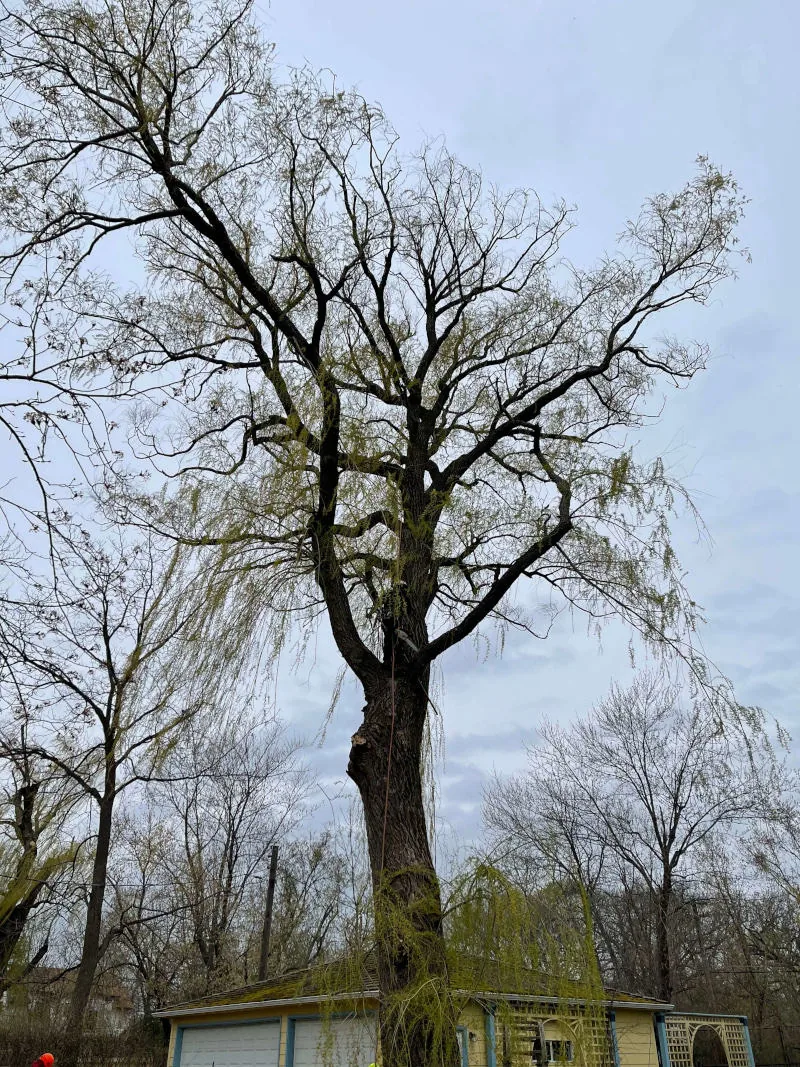
The Oak Wilt Exception: When Not to Prune
Oak wilt is a serious fungal disease that is present in Illinois. It is spread by small sap-feeding beetles that are attracted to fresh wounds on oak trees, and they are most active in spring and early summer. To lower the risk, avoid pruning or wounding oaks from about April through July. Trim them in the dormant season instead.
If an oak is damaged by wind or a storm during that window, do not wait. Broken limbs need to come off, and wounds should be sealed right away. If you are not sure, call us. It is a case where timing genuinely matters for the life of the tree.
Spring: Trim Spring-Flowering Trees After They Bloom
Spring is a good time to remove storm damage from the winter and to shape flowering trees. But timing depends on the tree. Spring-bloomers like redbud, dogwood, lilac, and flowering crabapple set next year's buds on old wood, so prune them right after the flowers fade. Prune them in winter and you cut off the bloom. Maples, birches, and walnuts may “bleed” sap if cut in early spring. It looks alarming but is generally harmless.
Summer: Fine for Light Work and Safety Trims
Summer is not ideal for heavy pruning, since the tree is actively growing and using stored energy. It is a fine time for lighter jobs:
- Removing dead, broken, or diseased branches
- Clearing limbs that rub on your roof, siding, or gutters
- Lifting the canopy for clearance over driveways and walkways
- Trimming branches near utility lines. Leave this to trained crews only
Summer thunderstorms are also common in Lake County. Cleaning up after them is covered by our emergency storm cleanup service, and safety comes before season.
Fall: Wait Until the Leaves Drop
Early fall is not the best time for big cuts, because fungi release many spores in autumn and trees are heading into dormancy. Once the leaves are down and the trees have shut down for the year, you are back in the ideal window. If you are planning winter work, late fall is a good time to book.
Best Trimming Time by Tree Type
| Tree | Best time | Notes |
|---|---|---|
| Oaks | Nov – March | Avoid April – July (oak wilt) |
| Maples | Late fall – winter | Spring pruning may bleed sap |
| Ash | Winter, when needed | Emerald ash borer is widespread. Ask if the tree is worth saving |
| Redbud, dogwood, crabapple | Right after bloom | Winter pruning removes flower buds |
| Lilac, forsythia | Right after bloom | Trim soon after flowers fade |
| Evergreens (pine, spruce) | Late winter – early spring | Avoid heavy cuts into bare wood |
| Fruit trees | Late winter | Before new growth starts |
Signs a Tree Should Be Trimmed Right Now
Some situations should not wait for the perfect season:
- Dead, cracked, or hanging branches, especially over a roof, driveway, or play area
- Limbs touching or close to power lines
- Branches rubbing against your house or scraping the roof
- Sudden thinning, dieback, or a crown full of dead twigs
- Storm damage of any kind
If a tree is beyond saving, trimming is not the answer. In that case a tree removal cost guide can help you plan, or just call us for an honest opinion.
How Often Should You Trim Your Trees?
A good rule for mature shade trees is every three to five years. Young trees benefit from light structural pruning early, which can prevent bigger problems later. Fast growers, trees near your house, and those near power lines may need more frequent attention. Regular care is almost always cheaper than waiting until a big limb fails.
Trimming vs. Pruning: What Is the Difference?
People use the words interchangeably, but there is a difference. Trimming is mostly about size, shape, and clearance. Pruning is about the health and structure of the tree, such as removing diseased wood or correcting weak branch unions. You can read more on our tree trimming and tree pruning pages.
Why Hire a Professional?
Trimming looks easy from the ground, but ladders, chainsaws, and overhead limbs are a dangerous combination, and any job near power lines is best left to trained crews. Improper cuts, such as topping or leaving stubs, can weaken a tree and shorten its life. A licensed and insured crew protects both the tree and your property. We serve Zion, Waukegan, Gurnee, Winthrop Harbor, and communities across Lake County. See our tree service in Zion and Lake County for the full picture.
Frequently Asked Questions
What is the best month to trim trees in Illinois?
For most trees, late fall through late winter, roughly November through March, is the best window. Trees are dormant, cuts are easy to see without leaves, and there is less stress on the tree.
When should you not trim oak trees in Illinois?
Avoid pruning oaks from about April through July, when the beetles that spread oak wilt are most active and fresh cuts are most at risk. If an oak is damaged in a storm during that window, cover any cut wounds right away and call an arborist.
Can you trim trees in summer?
Yes, for light pruning, removing dead or hazardous branches, and clearing limbs off a roof or wires. Heavy pruning in summer is harder on a tree, so save major structural work for the dormant season.
When should you trim spring-flowering trees like lilac or redbud?
Right after they finish blooming. These trees set next year's flower buds on old wood, so pruning them in winter removes flowers you would have had in spring.
How often should trees be trimmed?
Most mature shade trees do well with trimming every three to five years. Fast-growing species, trees near power lines, and trees close to your roof may need attention more often.
Is it okay to trim a tree after a storm?
Yes. Broken, hanging, or split limbs are a safety hazard and should be removed as soon as it is safe, regardless of season. If a limb is near power lines, do not touch it. Call a professional.
Get a Free, Honest Estimate
Whether it is a routine trim or a limb hanging over your roof, we will look at the tree, tell you the right timing, and give you a clear written quote.